Margot Frank
Diary of Anne FrankMargot Frank, Anne Frank’s older sister, appears in Anne’s diary as both a member of the family’s shared history and a distinct person against whom Anne measures her own place within it. Born in Frankfurt am Main in 1926, Margot emigrated with her family to the Netherlands as a child, attended the Jewish Lyceum, and went into hiding with them in the Secret Annex. Anne’s recollections trace a relationship marked by childhood comparison and family partiality, but also by acts of closeness: sharing a bed, exchanging permission to read one another’s diaries, and living through danger together. Margot’s call-up is the immediate trigger for the family’s move into hiding; her death at Bergen-Belsen, alongside Anne’s, gives that shared history its devastating end.
Identity and Early Life
Margot was born in Frankfurt am Main in 1926, three years before Anne. Because the family was Jewish, their father, Otto Frank, immigrated to Holland in 1933 and became managing director of the Dutch Opekta Company. Their mother, Edith Frank, followed in September; Margot and Anne stayed with their grandmother in Aachen. Margot went to Holland in December, while Anne followed in February, arriving as a small child and, in her own later phrasing, as a birthday present for her sister.
Margot attended school in Holland and later joined Anne at the Jewish Lyceum. Anne’s diary gives little independent account of Margot’s school life or character beyond this outline, but the sisters’ shared education places them together within the increasingly circumscribed world of Jewish children under Nazi rule. Their childhood was already touched by events beyond the household: relatives in Germany suffered under Hitler’s anti-Jewish laws, and after the 1938 pogroms their mother’s two brothers fled to North America. Their elderly grandmother came to live with the family and died in January 1942.
The occupation transformed everyday life through a succession of restrictions imposed on Jews: they were required to wear the yellow star and attend Jewish schools, and were barred from ordinary forms of transport, public recreation, and evening movement. Anne recalls a friend saying she no longer dared do anything for fear it might be forbidden. These limits form the background to Margot’s adolescence and to the family’s later decision to disappear from public life.
The Call-Up and the Move into Hiding
In July 1942, the family learned that the call-up was for Margot, who was sixteen. The news was a second shock to Anne, who began to cry; it also made clear that the danger had reached the daughters directly. Their mother had said Margot would not be sent away, and the family’s plan to go into hiding—until then only partly explained to Anne—became urgent and concrete.
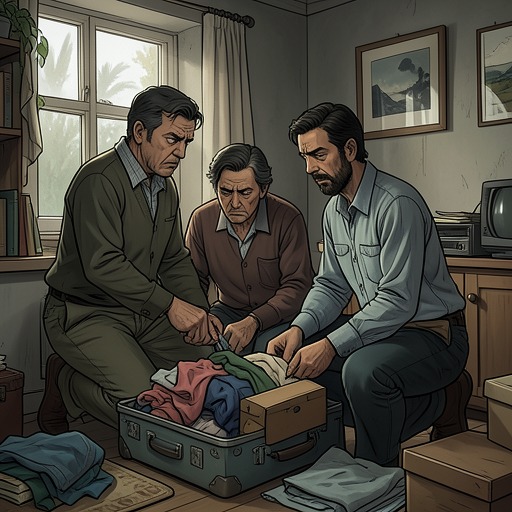
The sisters packed their most important belongings into a schoolbag. Anne put her diary in first, followed by practical and personal items such as curlers, handkerchiefs, schoolbooks, a comb, and old letters. She reflected that memories meant more to her than dresses. Margot’s call-up thus marks not only the danger that prompted flight but also a change in the sisters’ circumstances: they left the ordinary routines of school and home for a life organized around concealment.
After the family reached 263 Prinsengracht, Miep led them through the hallway and up the wooden staircase into the Annex. Margot had arrived earlier by bicycle and was waiting there. The rooms were packed with boxes and household goods sent ahead to the office. On the first day, Edith and Margot were too exhausted to begin unpacking, while Otto and Anne set to work clearing space, unpacking boxes, filling cupboards, and hammering nails. They went to bed in clean beds after a day without a hot meal. The hurried, practical labor of establishing a livable interior became one of the first shared tasks of the hidden household.
Sisters in the Annex
Anne’s picture of her relationship with Margot is not consistently affectionate. In a painful account of family tensions, Anne says that Edith and Margot tend to take one another’s side, and that she has become used to her mother’s rebukes and Margot’s moodiness. She insists that her deepest hurt is not envy of Margot’s intelligence or beauty, but a longing for Otto to love her for herself rather than simply as his child. In Anne’s perception, Margot is often treated as the smarter, kinder, prettier, and better daughter, while Anne is cast as the family clown and mischief-maker. The diary presents this as Anne’s experience of the family, not as an objective verdict on Margot.
That strain coexists with evidence of changing closeness. Anne later writes that she, Edith, and Margot are once again getting along very well. One night Margot lies beside Anne in her narrow bed, and the cramped arrangement becomes a source of shared amusement rather than complaint. Margot asks to read Anne’s diary from time to time; Anne agrees to selected parts and asks to read Margot’s in return. The exchange suggests a more reciprocal intimacy, built around the private writing each sister keeps and the trust involved in allowing the other into it.
Their companionship also has to be understood within the Annex’s crowded social world. When Anne spends time upstairs with Peter, she is troubled that Margot must sit downstairs alone. Anne thinks Margot would be welcome to join them, but imagines she would feel out of place, sitting without a part in their conversation. The concern is modest but revealing: even as Anne pursues a new closeness of her own, she remains attentive to the loneliness her sister might experience. At meals, the adults repeatedly joke about a possible Annex wedding if the war lasts another five years; Anne and Peter dismiss this teasing, while Anne also resents that the grown-ups laugh when the young are serious and become serious when they joke.
Daily Life and Shared Pressures
The sisters’ life in hiding was shaped by practical scarcity as well as emotional strain. To make the bare bedroom more cheerful, Otto had brought Anne’s collection of postcards and movie-star pictures to the Annex, and Anne pasted them onto the blank walls. The small change in the room’s appearance was part of the larger work of making an unfamiliar hiding place function as a home. Margot and Edith, initially overwhelmed by the move, gradually recovered enough to resume household tasks; Edith’s first attempt to cook split-pea soup ended with the beans scorched after she forgot the pot while talking downstairs.
Food provision demanded planning and exposed the household to mishaps. The residents stored a hundred cans and bought three hundred pounds of beans, partly to feed the office staff as well as themselves. The sacks were first hung in the hallway near the secret entrance, but seams split under their weight, so they had to be moved to the attic. Peter carried five sacks upstairs intact; the sixth broke, scattering about fifty pounds of beans down the stairs. Anne and Peter gathered them, and afterward the residents searched the stairs and corners for stray beans to give to Mrs. van Daan. Such episodes show how the Annex’s routine could turn a basic task into a noisy risk, followed by days of practical cleanup.
Religious observance, too, had to be adapted to limited supplies. Hanukkah and St. Nicholas Day fell only a day apart in 1942. The family marked Hanukkah with a few small presents and candles lit for just ten minutes because candles were scarce. Mr. van Daan made a wooden menorah. The short ceremony preserved a familiar practice within the constrained life of hiding; its smallness was dictated by material conditions, not by the absence of meaning.
The danger of discovery produced further restrictions. After a break-in, the residents had only half an hour to restore the house and themselves to order before assistance returned. Anne records Margot and herself making the beds downstairs, washing and combing their hair, and then helping prepare coffee and tea. The episode turns ordinary acts of tidying and personal care into part of an emergency response. Later security measures altered daily routines: Peter was assigned to patrol the house, windows and toilet use were restricted, and a barricade was planned. These rules affected everyone in the Annex, including Margot, whose life was confined by the same danger and obligations.
Identity, Separation, and Ending
Anne’s reflections on Jewish identity give the sisters’ confinement a meaning beyond the household. After a break-in and the tightened security that followed, Anne describes Jews as chained to one spot, without rights but burdened with obligations. Her writing moves from the immediate rules of survival to a hope that the time will come when Jews can again be people rather than be defined only by their Jewishness. She also insists that they will remain Jews, even when they are free to choose that identity for themselves. The diary does not present Margot’s private response to these reflections, but she shares the conditions that make them urgent: the restrictions, the dependence on others, and the constant need for caution.
That forced identity is also present in Anne’s later account of antisemitism and exclusion. She reports hearing that German Jews who had immigrated to Holland before the war and were later sent to Poland might not be permitted to return, even though they had been granted asylum. The possibility troubles her because the war is being described as a struggle for freedom, truth, and justice while Jews are again treated as lesser beings. Anne says she loves Holland, which she had hoped would become her fatherland after the loss of her first home. Margot’s family life is inseparable from this precarious belonging: the Netherlands offered refuge, but occupation and persecution made safety conditional.
Margot’s story ends in deportation and death. After the residents of the Secret Annex were arrested, she and Anne were transported from Auschwitz to Bergen-Belsen at the end of October 1944. A typhus epidemic, following the camp’s appalling hygienic conditions, killed thousands of prisoners. Margot died during the epidemic; Anne died a few days later, probably in late February or early March 1945. The account states that both girls’ bodies were probably placed in the camp’s mass graves. Their deaths close the diary’s remembered story of sisterhood not with a private resolution, but with the destruction of the two young lives whose relationship Anne had recorded in its tensions, small acts of care, and gradual movement toward closeness.